The slowness of Red Dead Redemption II and why it works
The slowness of Red Dead Redemption II and why it works Think carefully about your actions My adventure with Arthur Morgan and John Marston lasted one hundred hours, one hundred hours in the Wild …
Note
Curator's note
I recently had a playthrough of Red Dead Redemption 2, and this article lists all the things I felt. When I played it the first time in 2018, it was slow – painfully slow. But I liked it; today it feels like relaxation and deceleration.There was an episode of The Big Bang Theory a few years ago where Sheldon said he was going for a walk, then he went to his Xbox and played Red Dead Redemption Part 1. This is how I feel about Part 2.
I also like that we play a 40-something cowboy in the latter age of his career, and you see that his best days are over. When he runs, he runs fast, but when he stops, there's a slow moment where he's going slower, jogging out, and you feel it.
Or I feel it as I'm the same age 🥲
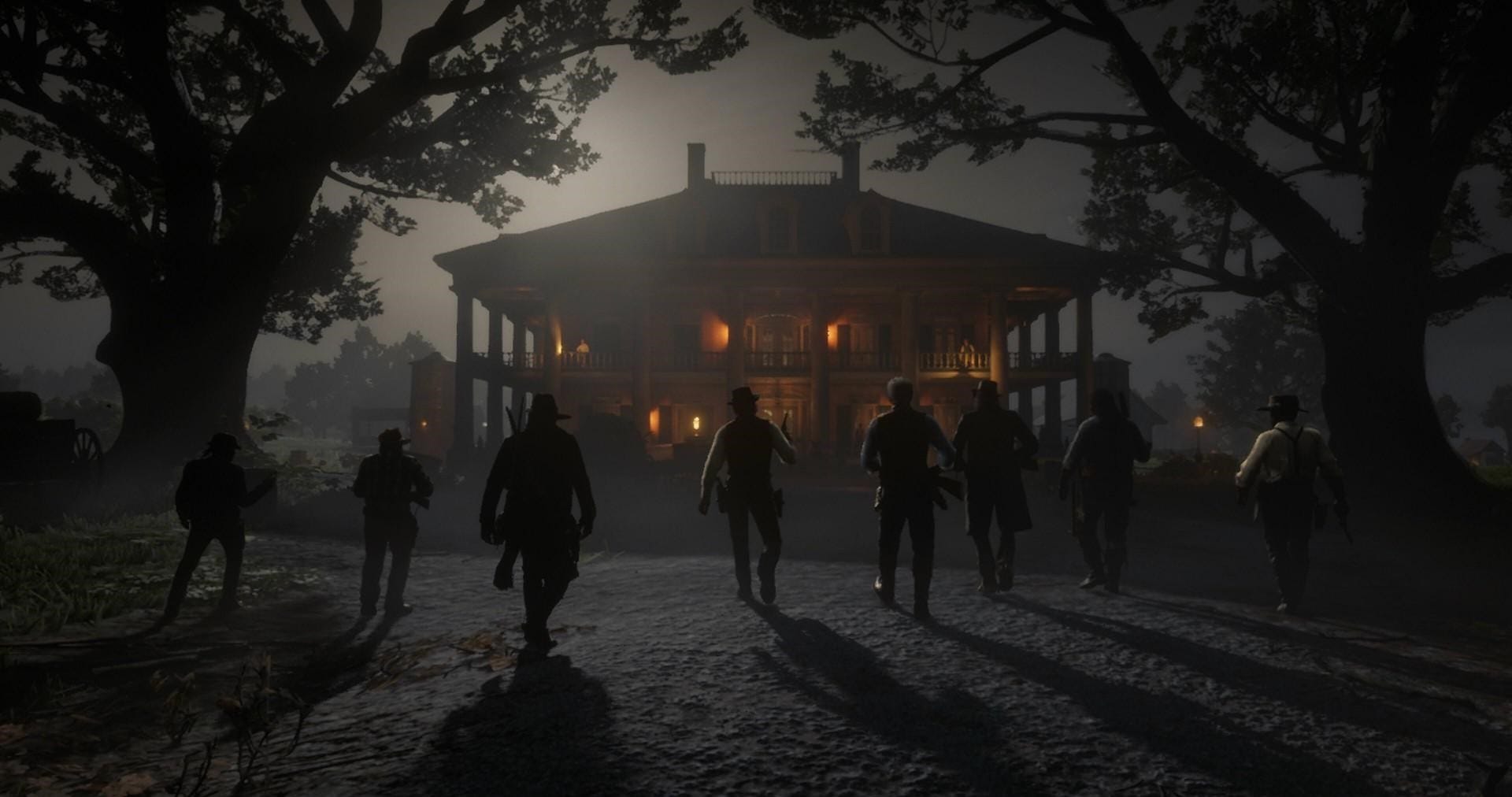
And then there are these explosive moments where it's fully epic - a train approaches, and we slowly step above a wagon with a rifle in hand, looking epic. This is cool, stylish, and why I love that game.
Also this time, it had the same effect as the last time I played it. Back then, I was stunned by the gameplay, by the story, by everything it offers. After that, I played an Assassin's Creed game—I think it was Odyssey—and I was getting on a horse in the game, and I hated it. It felt stiff; it felt horrible, and it was a difference between night and day. And now, after I played it a second time, I think it destroyed my interest in other games again.
(By the way, is this post‑reads different? I tried some dictation software)
Highlights
as it was very criticized because of the level of crunch that was carried out during its development, so in a certain way, we are also rewarding this.
The gameplay experience of this game is characterized by a slow, and at times contemplative, pace.
However, in this universe, performing such actions becomes a premeditated activity, as our character executes the complete motion of grabbing an object, opening a closet, or looking through a book — and skipping it is not an option.
Looting a corpse while in a firefight might not be a great idea, as it would be in real life, unless you want to be exposed to enemy fire.
How many times I have found myself about to confront an enemy, only to realize that I haven’t retrieved the necessary weapons from my horse’s saddle. Then I have to backtrack to the animal, open the weapons menu, and select the one I need. That’s assuming the horse hasn’t run away from the sound of gunshots.
, when a confrontation is unskippable, either because it belongs to the main story or an important mission in which you need a specific weapon, the game will provide you with the appropriate weapons in your inventory
We also have random events in the world that the game uses to encourage us to ride long distances without using fast travel. As you repeatedly press the gallop button, you enjoy its landscapes, become terrified by them, and consider whether it is worth giving up the beauty of the world for violence.
Because that’s what the title is about, right? Redemption. The narrative encourages this idea but it is important for the gameplay to do it as well.
pushes the player to reconsider Arthur’s actions, while he also does so about himself.
Even at some moments in the game, a character will invite us to sit with them alone and ask us how we feel as if it were a therapy session.
However, if you talk to him, you will discover new information about Arthur’s past.
Could we have skipped it and reduced it to a cinematic? Yes. But then we wouldn’t be enjoying, this time from Marston’s perspective, the work of building your own house, in contrast to your years as an outlaw, where pushing buttons caused destruction.
In a world of chaos and irresponsible actions, the gameplay slows down to contrast those moments. The slowness of the daily actions of Red Dead Redemption II allows us to reflect on the consequences and morality of our actions.